Key Takeaways
- Tinting falls into two groups: window film for comfort and protection, and lamp tint for style.
- Choose window film by type first and shade second.
- Headlight and taillight tint is a styling upgrade. Visibility and legal compliance come first.
- A blackout look works best when windows, trim and lamps match.
- Ask your installer what suits each part of the vehicle and what Ontario’s rules require.
What People Mean by Auto Tinting
A search for auto tinting returns several different services. Most people mean window film, the most practical form. Others mean headlight or taillight tint, a styling upgrade that gives the lamps a smoked look. Some mean paint-related films such as colour-shift or protective film.
Separating these before you speak to a shop helps, because they solve different problems.
Window Tint: The Practical Side
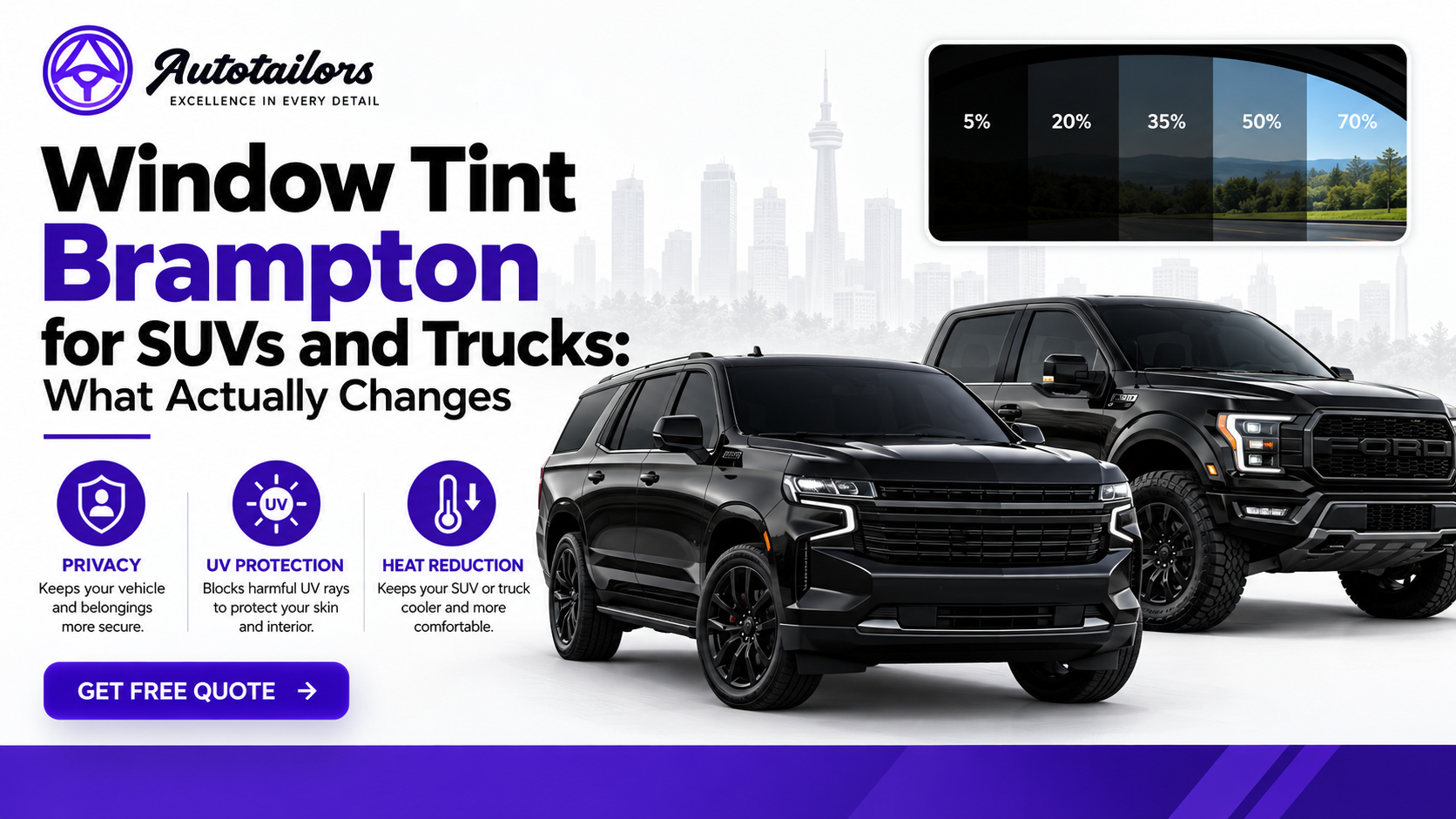
Quality window film lowers glare, adds UV protection, keeps the cabin more comfortable and gives more privacy. Ceramic films are designed to reject infrared heat while keeping a clear view, which is why many drivers choose them for daily cars. See the window tinting page for options.
UV and heat performance depend on the film rather than on darkness, so for drivers who spend time in the sun it is worth choosing film by its specifications.
Headlight and Taillight Tint: The Style Side
Lamp tint is a thin film applied over the lens to give it a smoked or darker appearance. It is popular on trucks, sports cars and sedans that already have black trim and tinted windows. Auto Tailors offers headlight and taillight tint for drivers who want that look.
Because lamps are safety equipment, they deserve more care than a purely cosmetic upgrade. Lights exist to make your vehicle visible, and overly dark film can reduce that visibility.
Window Film or Lamp Tint?
| Feature | Window film | Headlight and taillight tint |
| Main purpose | Heat, UV, glare, privacy | Appearance |
| Safety consideration | Night visibility and Ontario rules for front windows | Light output and visibility to other drivers |
| Reversible | Yes, film can be removed | Yes, film can be removed |
| Best paired with | Ceramic coating, paint protection | Chrome delete, window tint |
| Who it suits | Almost any driver | Drivers who want a styled look |
Auto Tinting Brampton Safety and Legal Points
In Ontario, the Highway Traffic Act addresses coloured or reflective material on the windshield and front side windows, and you can read the wording on ontario.ca. Vehicle lighting is also regulated, so ask the installer what suits your vehicle and whether the film reduces light output. Rules and enforcement can change, so confirm the current position before booking.
- Avoid film so dark that lamps become hard to see in daylight or at night.
- Keep lamp colours consistent with what your vehicle is required to display.
- Keep your invoice and film details in case they are needed later.
- Ask the installer what they will and will not do on lamps.
Who Benefits Most
Not every driver needs every upgrade. Commuters and parents tend to gain most from window film because of glare, heat and UV. Truck and SUV owners who like a bold look often add lamp tint and blackout trim. Drivers who keep a car for many years usually care most about durability and aftercare. Knowing which group you fall into lets you start with the product that solves your main problem.
Building a Consistent Blackout Look
Tinted windows, black trim and smoked lamps share a visual language, and mismatched finishes distract from each other. A typical order of work is:
- Start with window film in a shade that suits daily driving.
- Add a chrome delete in the same gloss or satin finish.
- Consider a roof or mirror partial wrap for contrast.
- Add lamp tint last, after checking visibility and rules.
The Auto Tailors gallery shows how these elements combine.
Protecting What You Tint
Film on glass and lamps does not protect the paint. Paint protection film guards the front end against stone chips, and a ceramic coating makes washing easier. A shop that offers all of these can plan the work in a sensible order.
Caring for Windows and Lamps
- Use an ammonia-free cleaner and a soft cloth on glass and film.
- Avoid abrasive pads and strong solvents on lamp film.
- Hand wash when possible and avoid pressure near edges.
- Check for lifting or peeling after winter and report it early.
The Government of Canada notes in its road salts overview that road salt is widely used for winter maintenance, so rinse the vehicle regularly in cold months.
If you are weighing window film against lamp tint, ask the shop what it would recommend for your vehicle and how it handles lamp visibility.
Common Mistakes
- Choosing the darkest option without testing night visibility.
- Treating lamp tint as harmless and ignoring light output.
- Skipping a conversation about Ontario’s rules before booking.
- Mixing finishes that clash, such as gloss trim with a very matte lens.
- Picking a shop on speed alone rather than film quality and finished examples.
A short consultation avoids most of these. Bring your questions and let the installer explain what works on your vehicle. You can reach the shop through the contact page or browse the services list.
Frequently Asked Questions
What does auto tinting include?
It commonly includes window film and, at some shops, lamp tint. Auto Tailors also offers wraps, paint protection film and ceramic coating alongside tinting.
Is auto tinting only about looks?
No. Window film offers heat control, UV protection, glare reduction and privacy. Lamp tint is mainly for appearance and needs more care because it affects safety equipment.
Is headlight and taillight tint legal in Ontario?
Vehicle lighting is regulated, so tint must not reduce visibility or change required light colours. Ask the installer and review the rules before you decide, since requirements and enforcement can change.
Can I do windows and lamps together?
Yes. Many customers combine them for a consistent look. A shop can plan the order of work and make sure the finishes match.
Does lamp film affect brightness?
It can if the film is too dark. Choose a lighter film and check that the lights remain clear and visible, including in daylight.
Can lamp film be removed?
Yes. A careful installer can remove it, though lens condition and the age of the film affect how easily it comes off.
What is the difference between ceramic and regular window film?
Ceramic is designed to reject more infrared heat and block UV while keeping a clear view. Regular dyed film mostly reduces visible light and can fade over time.
How do I choose an installer?
Look for clear answers, named film brands, tidy work and a gallery of finished cars. You can review examples on the gallery page.
Conclusion
Decide first whether you want comfort, a styled look or both. Window film and lamp tint solve different problems, and lamp tint needs extra care because it affects safety equipment.
Explore the window tinting and headlight and taillight tint pages, then contact Auto Tailors to plan your upgrade.