This guide explains the science behind heat rejection and UV protection in plain terms, so you understand precisely what you are paying for.
Key Takeaways
- Choosing window tint Brampton drivers can rely on for real protection starts with understanding film technology, not just shade
- UV rays and infrared heat are different parts of sunlight, and film affects each differently
- Ceramic film can block up to 99% of UV-A and UV-B rays
- Heat rejection depends on film technology, not on how dark the tint looks
- Blocking UV rays also protects leather, dashboards and upholstery from cracking and fading
- Ceramic film generally rejects the most infrared heat of the common film types
Two Separate Things: Heat and UV Light
Heat and UV rays get talked about together so often that people assume they are the same thing, but window film affects each of them differently.
UV rays are the invisible wavelengths responsible for sunburn, skin damage, and the fading of your dashboard, seats and trim over time. Infrared radiation is a separate part of sunlight, and it is largely what makes your cabin feel hot even on a day that is not especially bright.
How Window Tint Blocks UV Rays
This is exactly what good window tint Brampton drivers invest in achieves. Quality automotive film, ceramic in particular, can block up to 99% of harmful UV-A and UV-B rays. This matters more than most drivers realise. Research summarised by the American Academy of Dermatology has noted that drivers can develop more visible sun damage on the side of the body closest to the window, from years of accumulated exposure behind the wheel.
Beyond skin protection, blocking UV rays also protects your vehicle’s interior. Leather seats, dashboards and trim are all vulnerable to cracking and fading from prolonged sun exposure, and a good film noticeably slows that process down.
How Window Tint Rejects Heat
Heat rejection works differently from UV blocking. It describes how much infrared energy the film stops from entering the cabin in the first place, which directly affects how hot your parked car gets and how hard your air conditioning has to work to bring it back down.
Among the options for window tint Brampton shops carry, ceramic film leads clearly here, often rejecting more than half of incoming infrared heat, compared to the more modest results typical of dyed film. This is why two cars with an identical visible tint darkness can feel completely different inside – one may be running dyed film with limited heat rejection, while the other relies on ceramic technology doing the real work.
- Cooler cabin temperatures during hot Brampton summers
- Less strain placed on your air conditioning system
- More comfortable seating surfaces, particularly leather
- Reduced glare from direct sunlight while driving
UV and Heat Performance by Film Type
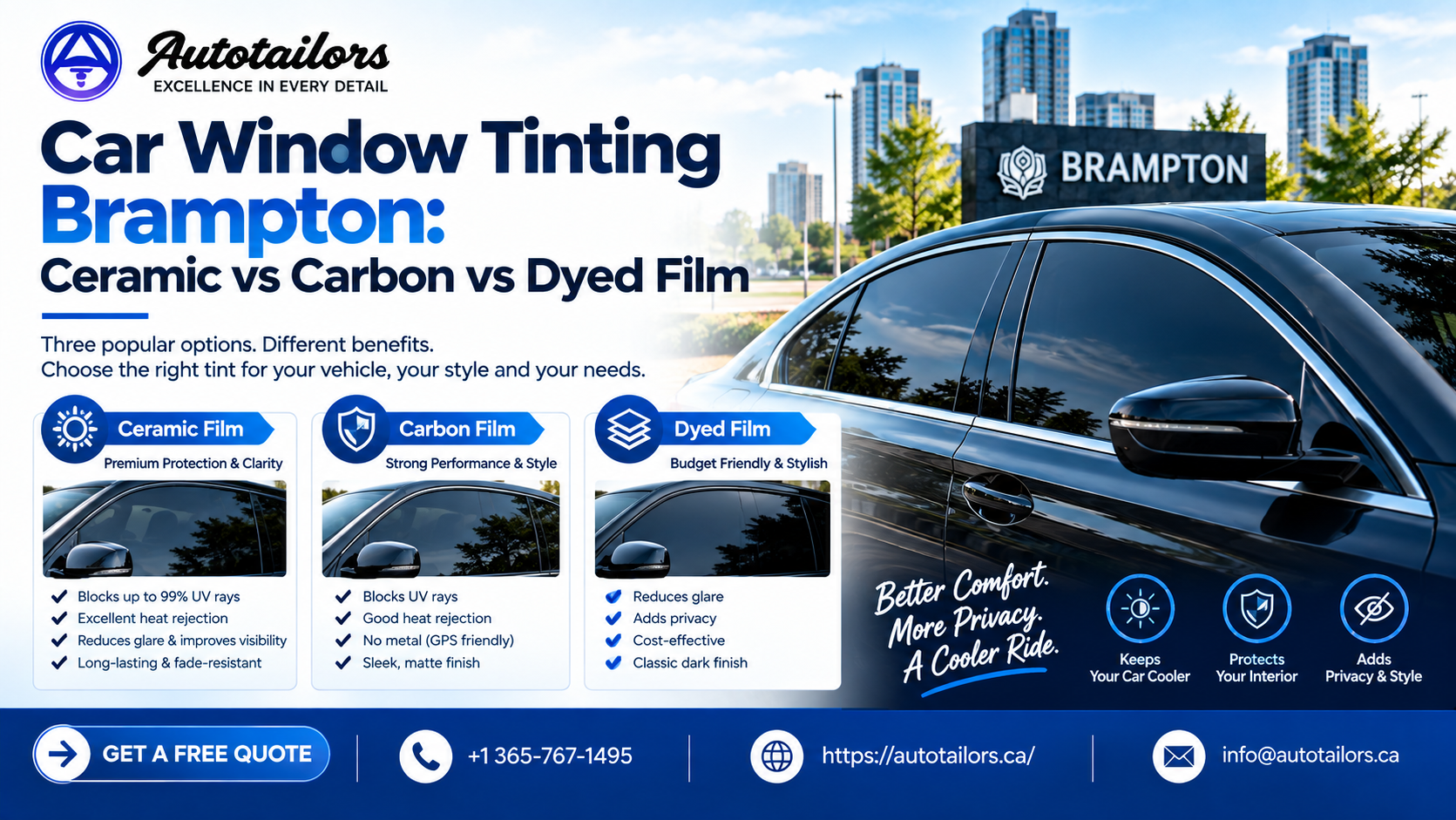
| Film Type | UV Protection | Heat Rejection | Fades Over Time? |
| Dyed film | Moderate | Low | Yes |
| Carbon film | Good | Moderate | No |
| Ceramic film | Up to 99% | High (50%+) | No |
Does Darker Film Mean Better Protection?
This is one of the most common misconceptions we hear at the shop. Darkness and performance are not the same thing. A very dark dyed film can still let significant heat and UV rays through, while a lighter-shade ceramic film can outperform it in both categories.
If heat and UV protection are genuinely your priority, ask specifically about the film’s UV rejection percentage and infrared rejection percentage, rather than judging purely on how dark it looks against the glass. Our comparison of ceramic vs carbon vs dyed film covers this in more depth.
Real-World Impact for Brampton Drivers
This is where window tint Brampton installations genuinely earn their keep. Ontario summers bring long stretches of direct sun, especially for drivers commuting along corridors like the 410 and 407 with little shade along the way. Vehicles parked outdoors all day at work, or sitting on a driveway at home, absorb a significant amount of heat that has to be cooled back down every time you get in.
Customers who upgrade from no tint, or from old dyed film, to a modern ceramic package consistently tell us the steering wheel, seats and cabin air feel noticeably cooler within the first few minutes of driving, often before the air conditioning has fully kicked in. If you would like to know how the Ontario Ministry of Transportation frames the legal side of tint darkness alongside this, our Ontario tint laws guide covers that in detail.
Serving Areas in the GTA
At Autotailors, we serve customers across the Greater Toronto Area:
- Brampton
- Mississauga
- Toronto
- Vaughan
- Etobicoke
- Oakville
- Burlington
- Milton
- Caledon
- Halton Hills
- Richmond Hill
- Markham
Why Choose Autotailors
At Autotailors, we are Brampton’s trusted destination for premium window tinting and automotive styling. What sets us apart:
- Premium materials – industry-leading films from trusted manufacturers like 3M
- Certified installers – clean, bubble-free application every time
- Legal compliance – every installation follows Ontario’s Highway Traffic Act
- Full-service solutions – from consultation through professional installation
- Serving the GTA – Brampton, Mississauga, Toronto, and surrounding areas
- Convenient location – 22 Strathearn Ave Unit 11B, Brampton, ON L6T 4S9
Frequently Asked Questions (FAQs)
- Does window tint really block UV rays, or is that just marketing?
It is real and measurable. Quality ceramic film can block up to 99% of UV-A and UV-B rays, which is independently testable with a UV meter.
- Will tint stop my car from getting hot in the sun altogether?
It significantly reduces heat build-up, especially with ceramic film, but it will not eliminate heat entirely on a vehicle parked in direct summer sun.
- Is darker tint always better for heat rejection?
No. Heat rejection depends on the film’s underlying technology, not its visible darkness. A lighter ceramic film can outperform a darker dyed film.
- Can window tint protect my leather seats and dashboard?
Yes. Blocking UV rays helps slow down cracking, fading and discolouration of interior materials over time.
- What film does Autotailors recommend for the strongest heat and UV protection?
We recommend ceramic film for drivers who want the highest available UV protection and infrared heat rejection performance.
- Does window tint help protect my skin while driving?
Yes. By blocking most UV-A and UV-B rays, quality window film reduces cumulative UV exposure during regular driving.
- How quickly will I notice a difference in cabin temperature?
Most drivers notice a cooler cabin within the first few days, particularly during direct afternoon sun.
- Does tint affect visibility at night?
Legally installed tint on front side windows, staying above 70% VLT, has minimal impact on night-time visibility.
- Is UV protection from tint permanent?
Ceramic film maintains its UV-blocking properties for many years without significant degradation, unlike dyed film which can weaken as it fades.
- Do I still need sunscreen if my windows are tinted?
Tint reduces UV exposure but does not eliminate it entirely, so sunscreen remains a sensible additional precaution on long drives.
- How do I book window tint Brampton services with Autotailors?
You can contact us directly through our website or visit our Brampton location to discuss film options and book your appointment.
Final Thoughts
Heat rejection and UV protection are two of the biggest reasons drivers invest in window tint Brampton installations, but the level of protection you actually get depends entirely on the film technology used. Talk to the Autotailors team about your priorities, and we will recommend the right film to keep you, your passengers and your interior properly protected.
If you would also like to protect your paintwork from stone chips and road salt, our paint protection film Brampton service pairs well with a ceramic tint package. For warranty details on your finished installation, see our warranty and aftercare guide, or reach out through our contact page to book a consultation with Autotailors.