If you’re driving in Ontario and considering window tinting for your vehicle, understanding the province’s tint laws is essential to avoid fines and stay road-legal. Ontario window tint laws specify exact visible light transmission (VLT) percentages that determine how dark your tint can be, with different rules for front and rear windows. The legal tint in Ontario allows 0% tint on rear and back windows, but your front side windows must allow more than 70% of light to pass through, and your windshield can only have tint on the top 75mm strip. These regulations apply across the province, including Brampton, Toronto, Mississauga, and all other Ontario municipalities, and violating them can result in fines up to $110 plus potential vehicle inspection orders.
Understanding Ontario's Window Tint Regulations
The Ministry of Transportation of Ontario enforces specific standards for vehicle window tinting to ensure driver visibility and road safety. These laws apply uniformly across the province, from Brampton to Ottawa.
1. Front Side Windows: The 70% Rule: Your driver and passenger side front windows must allow more than 70% of visible light to pass through. This means you can only apply a light tint that blocks less than 30% of incoming light. This regulation exists because officers need to see inside vehicles during traffic stops, and drivers need maximum visibility when checking blind spots.
Many vehicle owners in Brampton initially find this restrictive, but this level still provides benefits like reduced glare and UV protection.
2. Rear Windows: Ontario tint laws offer complete freedom for your rear side windows and back windshield. You can legally apply any darkness level, including limo-black tint at 5% VLT or even 0%. This applies whether you drive a sedan, SUV, truck, or van.
3. Windshield Tinting Restrictions: Your front windshield has the strictest limitations. You may only apply tint to the very top portion, specifically the upper 75 millimetres (approximately 3 inches). The entire remaining windshield area must remain completely clear without any tint film.
Medical Exemptions to Ontario Tint Laws
Ontario provides exemptions for individuals with legitimate medical conditions that require protection from sunlight.
1. Qualifying Medical Conditions: Certain medical conditions make individuals photosensitive, including lupus, certain skin cancers, albinism, and specific eye conditions. A licensed physician must document that your condition genuinely requires additional window tinting beyond legal limits.
2. How to Apply for a Medical Exemption: You must obtain written documentation from your doctor and submit it to the Ministry of Transportation for review. If approved, you’ll receive official authorization that must be carried in your vehicle at all times. If stopped by police in Brampton or anywhere in Ontario, immediately inform the officer and present your documentation.
Penalties for Illegal Window Tint in Ontario
Violating Ontario window tint laws results in specific penalties that can affect your finances and driving record.
1. Fine Amounts and Inspection Requirements: The standard fine for illegal window tint is $110. Beyond the fine, officers can issue a vehicle inspection notice requiring you to remove the illegal tint and have your vehicle inspected at a licensed facility. This inspection costs additional money and time.
2. Impact on Insurance: While a window tint violation doesn’t typically add points to your driving record, it creates a conviction that some insurance companies may view as a minor violation affecting your rates. If illegal tint contributes to an accident by limiting visibility, your insurance claim could be complicated.
How Window Tint Darkness Is Measured
1. VLT Percentage Explained: VLT stands for Visible Light Transmission. A 70% VLT means 70% of visible light passes through. Lower numbers mean darker tint. When the law requires “more than 70%” for front windows, your actual VLT must exceed that threshold.
2. Tint Meters Used by Police: Police officers in Ontario use handheld tint meters that measure VLT electronically. These devices are calibrated regularly and considered legally accurate. If your tint measures at or below 70%, you’ll receive a citation.
3. Factory Tint Considerations: Many vehicles come with factory tint. If you add aftermarket film on top of factory tint, the VLT percentages multiply, not add. For example, adding 70% film to glass with 80% factory tint gives you 56% total VLT, which violates Ontario regulations.
Before adding any aftermarket tint to your front windows in Brampton, verify your factory tint level.
Choosing the Right Tint for Ontario Compliance
1. Front Window Options: For front side windows, ceramic tint films at 70% or higher VLT offer the best combination of legal compliance and performance. These films block significant heat and UV rays while maintaining required light transmission.
2. Maximizing Rear Window Tinting: Since Ontario tint laws place no restrictions on rear windows, popular options include:
- 35% VLT for balanced privacy
- 20% VLT for darker appearance
- 5% VLT (limo tint) for maximum privacy
3. Quality Matters: Quality films from reputable manufacturers come with lifetime warranties and maintain their appearance for years. Though more expensive initially, quality tint saves money by eliminating replacement needs.
Professional Installation vs. DIY Tinting
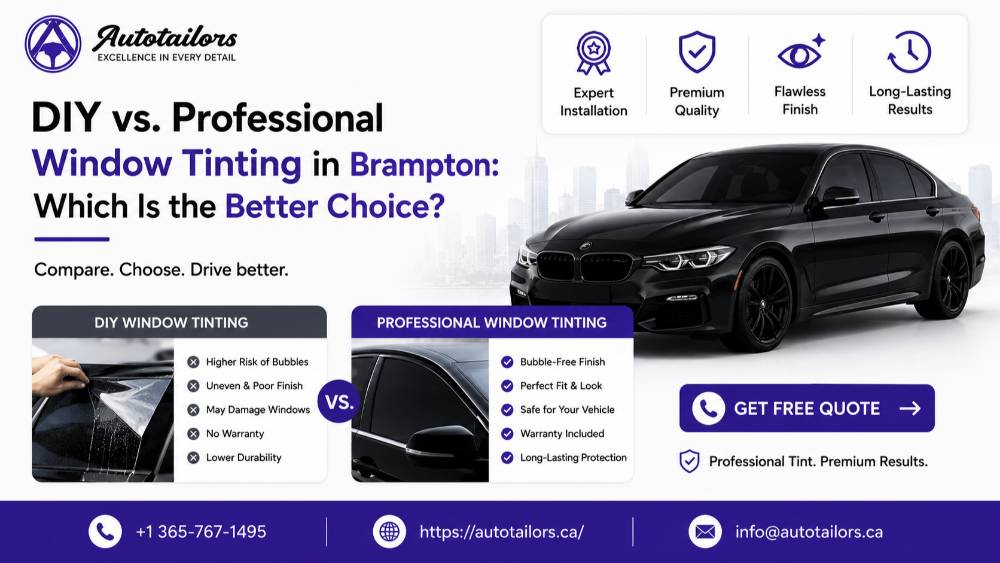
Professional installers work in dust-free environments, use proper techniques to avoid bubbles, understand legal requirements for Ontario window tint laws, and offer warranties on materials and labor.
Shops like Autotailors in Brampton employ trained technicians who stay current on legal requirements and use professional-grade materials
1. DIY Tinting Risks: DIY installation often results in bubbles, poor appearance, and difficulty ensuring accurate VLT percentages. Even if your film technically meets legal tint limits for Ontario, sloppy installation attracts police attention.
2. Cost Considerations: Professional tinting for a standard sedan typically costs between $200 to $600 depending on film quality. While DIY kits cost less initially, the risk of mistakes makes professional installation the smarter investment.
Window Tint Benefits Beyond Appearance
1. UV Protection and Heat Reduction: Quality window tint blocks up to 99% of harmful UV rays and significantly reduces solar heat gain. This keeps your car cooler during hot Ontario summers and protects your interior from fading.
2. Glare Reduction and Privacy: Tinted windows reduce harsh glare from sun and headlights, improving visibility and reducing eye strain. Darker rear tints provide privacy for passengers and conceal valuables.
Common Myths about Ontario Window Tint Laws
- Myth: You Can Have 35% Tint on Front Windows – False. Legal tint for Ontario front windows requires more than 70% VLT.
- Myth: Police Don’t Enforce Tint Laws – False. Ontario police actively enforce window tint regulations.
- Myth: Factory Tint Is Exempt – False. All tint, including factory, must comply with Ontario window tint laws.
- Myth: Tint Laws Only Apply to Sedans – False. Laws apply equally to all passenger vehicles including trucks and SUVs.
Special Considerations for Brampton Drivers
1. Climate and Local Enforcement: Brampton experiences hot summers where heat rejection from window tint provides significant comfort benefits. Peel Regional Police actively enforces traffic laws including tint regulations, so maintaining legal compliance prevents complications.
2. Finding Reputable Local Services: Research businesses thoroughly, read reviews, verify they understand Ontario window tint laws, and ask about warranties. Established shops like Autotailors build reputations on quality work and customer satisfaction.
Frequently Asked Questions
Front side windows must allow more than 70% of light to pass through. Rear windows can be any darkness including 0% VLT.
Yes, police officers can stop vehicles if they observe what appears to be illegal window tint.
Most vehicles with factory tinted front windows already sit near the 70% threshold. Adding aftermarket film will likely push you below legal limits. Rear windows have no restrictions.
Expect to pay $200 to $600 for a complete vehicle with quality film from a reputable installer.
Properly installed aftermarket window tint should not void your warranty. However, damage caused during installation may not be covered.
You must bring your vehicle into compliance with Ontario window tint laws. You’ll need to remove or replace non-compliant tint on front windows.