Key Takeaways
- Dyed, carbon and ceramic films each solve a different problem.
- Most heat comes from infrared light, and ceramic film is designed to block more of it without a very dark shade.
- Dyed film is the type most likely to fade or shift colour after years of sun.
- Good performance does not require a dark shade. A lighter ceramic film can feel cooler than a darker basic film.
- Match the film to your daily use, parking habits and plans for the car.
Why Film Type Matters More Than Shade
Sample squares in a shop are arranged by darkness, so it is easy to assume the darkest one does the most work. Shade only describes how much visible light gets through. Film technology determines how much heat and UV is dealt with before it reaches the seats.
Those are two separate jobs, and treating them as one is a common first-time mistake.
The Three Film Types Compared
| Feature | Dyed film | Carbon film | Ceramic film |
| Heat control | Basic | Good | Strongest |
| UV protection | Depends on the product | Strong | Strong |
| Colour stability | Can fade or turn purple | Stable | Very stable |
| Clarity of view | Good | Good | Excellent |
| Signal interference | None | None | Quality ceramic is designed not to interfere |
| Best for | Privacy and appearance | Balanced performance | Comfort and clarity |
These ratings are general guides. Brands and product lines vary, so ask your installer for the specifications of the exact film they plan to use.
Dyed Film
Dyed film uses dye layers to absorb light. It gives a smooth dark look and a private cabin, and it is the entry level of the range. The trade-off is durability: over years of sun, lower-grade dyes can break down, which is why older tint sometimes turns purple or patchy.
It suits drivers who mainly want privacy and a darker look and who may not keep the car for long.
Carbon Film
Carbon film contains carbon particles that stay stable in sunlight. It tends to keep a consistent matte-black look and usually offers better heat control than basic dyed film. For many drivers it balances performance and cost, and it works well on rear windows where privacy is the main goal.
Ceramic Film
Ceramic film uses microscopic ceramic particles designed to reject infrared heat and UV while letting visible light through. That is why it can be fitted in a lighter shade and still feel cooler on a sunny day. The clear view also helps at night and in rain.
The Auto Tailors ceramic window tinting service is built around this type of film.
Reading Performance Claims
Glass blocks some UV light but not all, and film can add to that. Because shade alone does not describe performance, ask for the manufacturer’s published figures for the exact product, such as UV rejection and total solar energy rejection. Treat any claim without a specification as a sales statement rather than data.
Which Film for Which Situation
| Your situation | Film to consider | Why |
| Long summer commute | Ceramic | Strong heat and UV control with a clear view |
| Family car with children in the back | Ceramic or carbon | UV protection and privacy |
| Short-term ownership | Dyed or carbon | Appearance now at lower cost |
| Daily driver parked outside | Ceramic | Handles long sun exposure |
| Blacked-out styling | Carbon with matching extras | Colour stays consistent |
To carry the style through, pair the windows with headlight and taillight tint or a partial wrap in a matching finish.
If you already know your priorities, share them with the shop and ask which film type it would recommend for your vehicle.
What the Appointment Involves
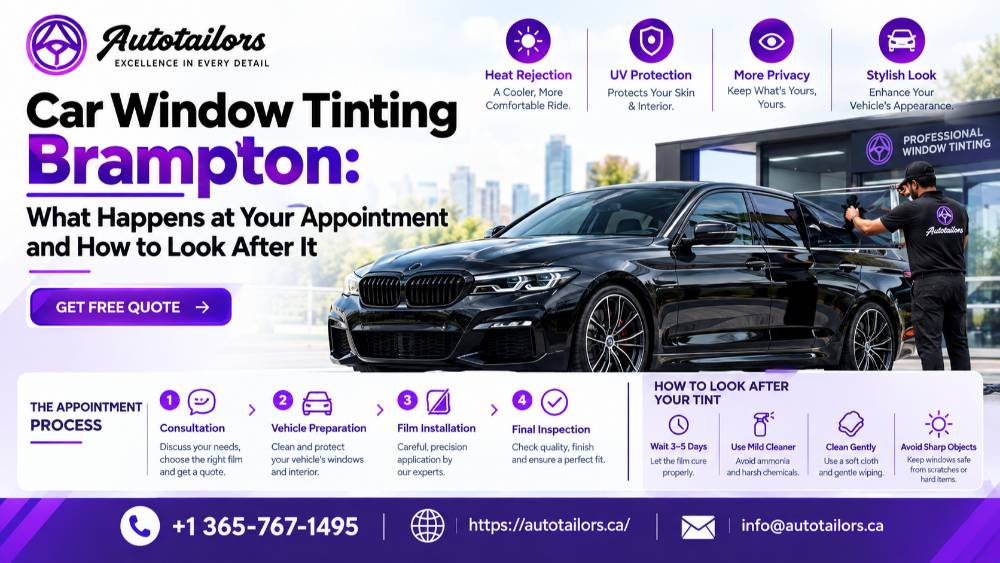
You drop the car off, the shop cleans and fits the film window by window, and you collect it with care instructions. When you book, ask how long your vehicle will need and whether any old film has to come off first, since that adds time. Leave the windows up as advised afterwards and avoid scrubbing the glass while the film settles.
Protecting the Rest of the Car
Window film handles the glass, not the paint. While the car is in, ask about paint protection film for high-impact areas and a ceramic coating for easier cleaning. The services page and gallery show how the shop approaches whole-vehicle projects.
Frequently Asked Questions
What is the best window tint for heat?
For heat and UV control with a clear view, ceramic film is usually the strongest option. Carbon suits balanced needs, and dyed film suits appearance and privacy. Ask the installer for the specifications of the exact product.
Does ceramic tint interfere with phone or GPS signals?
Quality ceramic film is designed not to interfere with signals. If this matters to you, ask the installer about the specific film before booking.
Will tint really lower the temperature inside?
Good film can make the cabin feel noticeably more comfortable by reducing infrared heat and glare. The result depends on the film, the shade and the vehicle, so treat any figure quoted in advance as a guide.
Why does some tint turn purple?
Lower-grade dyed film can break down under sun exposure and change colour. Carbon and higher-grade ceramic films are designed to resist this, though quality varies by brand.
Is a lighter film worth it?
Often, yes. A lighter ceramic film can give strong heat and UV performance while keeping visibility high, which many drivers prefer at night. It also leaves more room within Ontario’s rules for the front windows.
How long does quality tint last?
It depends on the film, the installation and the care it gets. Quality film installed carefully can last many years, and warranty terms vary by product, so ask what is covered.
Can I tint only some windows?
Yes. Many people tint the rear windows for privacy and use a lighter film at the front. Ask the installer which windows suit your goals and Ontario’s rules.
How do I choose between film brands?
Ask which brand and product line is being used, what it is designed to do and what the warranty covers. You can discuss options through the Auto Tailors contact page.
Conclusion
The right window tint Brampton drivers choose is not defined by the lowest number on the sample card. It depends on how you drive, where you park and how long you plan to keep the car, and a good shop will explain those trade-offs plainly.
See the window tinting service, compare finished work in the gallery, and get in touch to talk through ceramic, carbon and dyed film.