Key Takeaways
- Tint is most useful for people who commute, park outdoors or travel with children and pets.
- UV protection and heat control come from the film technology, not from darkness alone.
- Film reduces the UV and heat that fade and dry out seats, dashboards and trim.
- Privacy and appearance are real extras but not the main reason to tint.
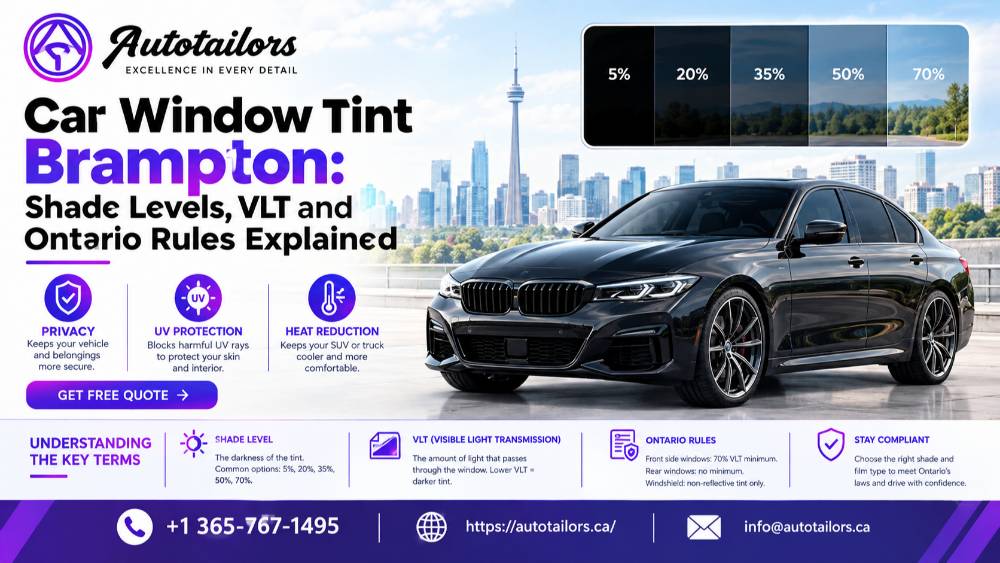
- Choose a shade that keeps night driving comfortable and follows the rules for each window.
Benefit 1: Less Glare
Low winter sun or a bright summer afternoon can leave you squinting even with sunglasses. Film reduces the harsh brightness reaching your eyes, which helps on longer drives. Lighter shades are often enough for glare control, so you do not need to go very dark to notice a difference.
Benefit 2: UV Protection
The Skin Cancer Foundation explains that clear UV-blocking window film can block a large share of UV light and that darker tint is not automatically more protective, in its expert guidance on car window tint. This matters for people who spend hours in a vehicle, drive for work or carry children in the back seat. The window tinting page covers the ceramic films Auto Tailors offers.
Benefit 3: A Cooler Cabin
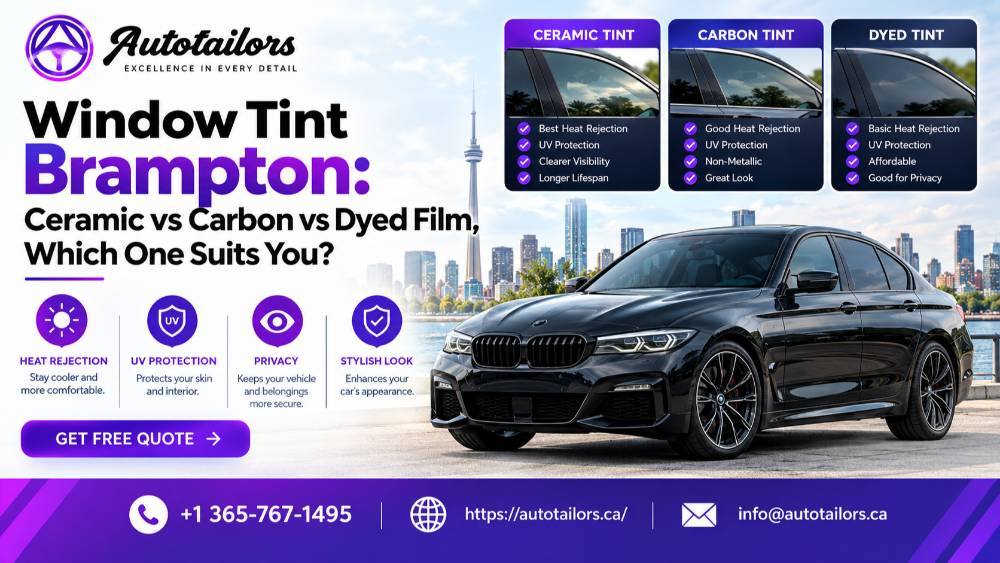
A parked car in direct sun heats up quickly. Good film reduces the heat coming through the glass, so the seats and steering wheel feel less harsh when you return. Ceramic film is designed to do this particularly well because it targets infrared light.
Natural Resources Canada notes that air conditioning can raise fuel use by up to 20 percent, as covered in its vehicle air conditioning guide. A film that reduces cabin heat may help the A/C work less hard.
Benefit 4: Interior Protection
Sunlight slowly damages interiors. Leather can dry out, plastics can fade and dashboards can crack. Quality film reduces the UV and some of the heat behind this wear, which helps the cabin keep its colour and feel for longer. A well-kept interior also supports the vehicle’s condition if you resell it.
Tinting Through the Seasons
Summer is the obvious season, but tint is useful all year. In winter the sun sits low and glare off snow can be intense. In spring and autumn, commutes into low morning or evening light feel less tiring behind film. UV exposure also continues on cloudy days, so interior protection is working whenever the car is outside.
Benefit 5: Privacy and Security
Tint can make items on the seats harder to see from outside and gives passengers more privacy in traffic and car parks. It is not a security measure, and it does not prevent theft.
Benefit 6: A Cleaner Look
Tint ties the windows to the paint and gives the vehicle a more finished appearance. To extend the style, consider headlight and taillight tint, a chrome delete or a partial wrap on the roof or mirrors.
Benefit 7: Added Glass Strength
Some films hold broken glass together if it cracks, which can reduce the spread of fragments. This depends on the film and the installation, so ask whether the product you are considering offers it.
The Benefits at a Glance
| Benefit | What drives it | Who notices it most |
| Less glare | Film shade and clarity | Commuters and evening drivers |
| UV protection | Film technology | Parents and long-distance drivers |
| Cooler cabin | Infrared rejection | Drivers who park outside |
| Interior protection | UV and heat control | Owners who plan to keep or resell |
| Privacy | Shade level | Anyone carrying valuables |
| Appearance | Shade and matching | Enthusiasts |
| Glass strength | Film construction | Safety-minded buyers |
Want a recommendation for your own car? Contact Auto Tailors with the make, model and what you most want from the film.
Common Myths
| Myth | Reality |
| Darker tint always blocks more heat | Heat control depends on film technology, not just darkness |
| Tint is only for looks | Glare, UV and interior protection are major reasons to choose it |
| All tint turns purple eventually | Lower-grade dyed film can, while carbon and ceramic are made to stay stable |
| Tint blocks phone signals | Quality films are designed not to, so ask about the specific product |
What to Check Before Booking Window Tinting Brampton Shops Offer
- Ontario’s rules for the windshield and front side windows, in the Highway Traffic Act on ontario.ca.
- The film type and brand: ceramic, carbon or dyed.
- Which shade suits night driving on the roads you use.
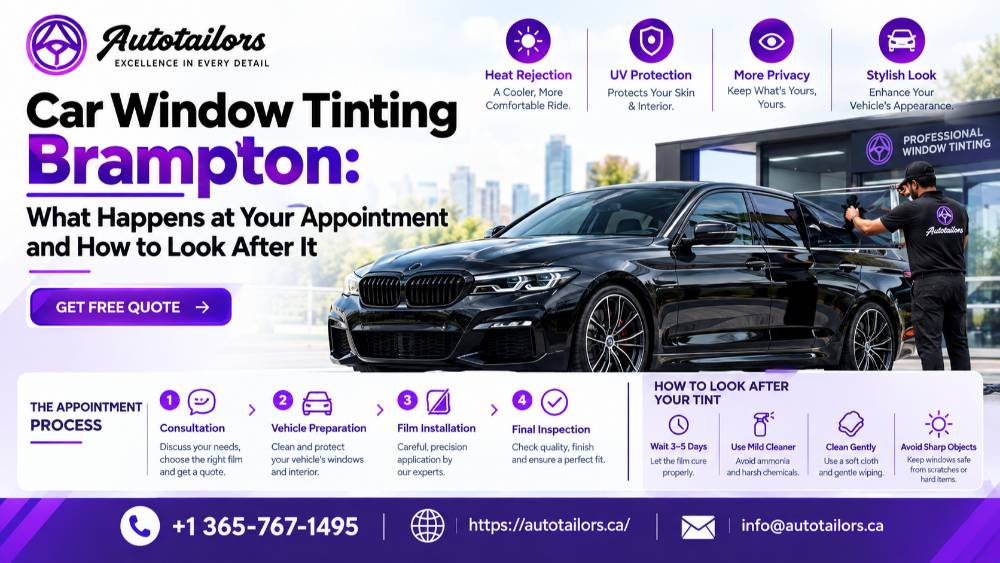
- What aftercare the installer recommends.
- Examples of the shop’s finished work, such as its gallery.
Auto Tailors offers ceramic window tinting alongside paint protection and wrap work. A shop that handles whole-vehicle projects can advise on how each service fits together.
Frequently Asked Questions
What are the main benefits of window tinting?
The main benefits are reduced glare, UV protection, a cooler cabin, interior protection, privacy, a cleaner look and, with some films, added glass strength. The size of each depends on the film type and shade.
Does tint really block UV?
Quality films are designed to block a high share of UV light. Ask for the specifications of the film being used rather than relying on shade, since darker film is not automatically more protective.
Will tint make my car cooler?
It can make the cabin feel more comfortable, especially with ceramic film that targets infrared heat. Results depend on the film, shade and vehicle, so ask the installer what to expect from the product they recommend.
Is tinting worth it in winter?
Yes. Low winter sun and snow glare are real issues, and UV exposure and interior wear continue all year. Winter is also a convenient time to book.
Can tint protect my dashboard?
Film reduces the UV and some of the heat that damage dashboards, leather and plastics. This helps slow fading and drying but does not stop ageing altogether.
Does tint make night driving harder?
Very dark film can reduce visibility at night. A lighter shade on the front windows is often more comfortable, and a sample viewed at dusk helps you judge.
Can I tint only the rear windows?
Yes. Many drivers tint the rear windows for privacy and use a lighter film at the front. Confirm what suits each window and Ontario’s rules with your installer.
How do I get started?
Contact the shop through the Auto Tailors contact page, describe your car and goals, and ask about film options and aftercare.
Conclusion
The case for window tinting Brampton drivers most often make is practical rather than cosmetic: less glare, more UV protection, a more comfortable cabin and a longer-lasting interior. Film type matters more than darkness, so compare products on performance.
Explore the window tinting page, see recent work, or contact Auto Tailors to plan your project.